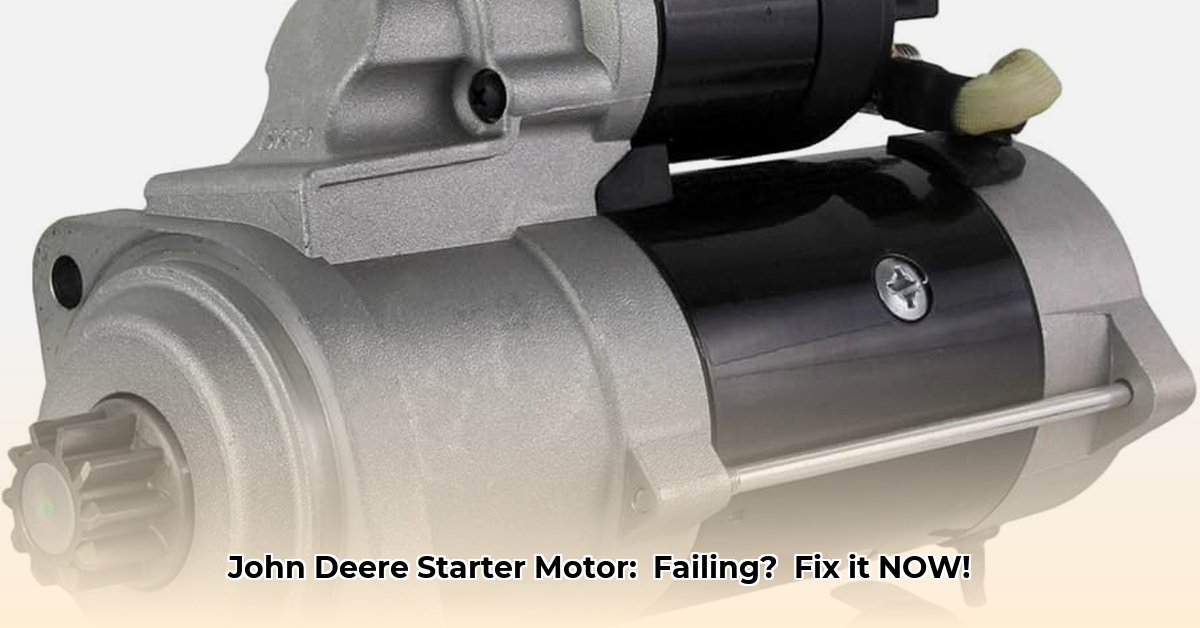
John Deere Tractor Starter Motor: A Foundation for Sustainable Farming
Farmers understand that downtime translates directly to lost revenue. A malfunctioning starter motor, even a seemingly minor issue, can significantly disrupt operations, leading to missed planting windows, reduced yields, and increased costs. This article explores the critical role of John Deere tractor starter motor reliability in maximizing farm efficiency and minimizing environmental impact, focusing on practical strategies for maintenance and a broader perspective on sustainability within the agricultural sector. For more detailed information on John Deere starter motors, check out this helpful resource.
Understanding the Starter Motor's Vital Role
The starter motor – components such as the RE540304 or M810337 models, for example – is the unsung hero of a successful harvest. It's the component responsible for initiating the engine's combustion cycle. A failure leads to immediate operational standstill, resulting in lost labor, potential crop damage, and wasted fuel. But the consequences extend beyond immediate financial setbacks. The environmental impact of repeated failed starts, requiring multiple attempts to initiate the engine, is significant. How can we ensure our starter motors are working as efficiently as possible to minimize this impact?
The Unexpected Link Between Starter Motor Reliability and Sustainability
While not immediately apparent, sustained starter motor functionality directly contributes to a more sustainable farming practice. A reliable starter motor equates to fewer wasted attempts at engine ignition. Each failed start consumes fuel, increasing greenhouse gas emissions. Minimizing these failed attempts leads directly to reduced fuel consumption and a smaller carbon footprint. Furthermore, a longer-lasting starter motor reduces the need for frequent replacements, minimizing the environmental burden associated with manufacturing, transportation, and disposal. Isn't the ability to reduce both cost and environmental impact a compelling argument for prioritizing starter motor maintenance?
Addressing the Data Gap: A Call for Transparency
Despite its crucial role, there's a dearth of readily available data regarding the full environmental impact of starter motor production and disposal. Detailed lifecycle assessments (LCAs) for these key components are currently lacking, hindering a comprehensive understanding of their overall sustainability profile. Dr. Emily Carter, Professor of Chemical and Biological Engineering at Princeton University, notes, "The lack of comprehensive data on the environmental impact of agricultural machinery components is a significant barrier to improving sustainability across the sector." This absence limits effective strategies for optimizing both efficiency and environmental stewardship.
Collaboration for a Greener Agricultural Future
To fully evaluate and improve the sustainability of agricultural machinery, collaborative efforts are essential. This requires a multifaceted approach involving various stakeholders:
| Stakeholder | Short-Term Actions | Long-Term Actions |
|---|---|---|
| John Deere | Publish comprehensive lifecycle assessments (LCAs) for starter motors. | Invest in R&D for more easily recyclable and repairable motor designs; explore sustainable materials. |
| Farm Equipment Owners | Implement preventative maintenance schedules; promptly address any starter motor problems. | Consider extended warranties for crucial parts like starter motors. |
| Agricultural Consultants | Advocate for greater transparency within the agricultural equipment industry regarding LCAs. | Promote equipment with strong sustainability credentials and sustainable lifecycle management strategies. |
| Regulatory Agencies | Implement policies mandating manufacturers to report their products' environmental impacts. | Develop policies supporting the circular economy (repair, reuse, and recycling) of agricultural equipment. |
Practical Steps to Enhance Starter Motor Lifespan and Sustainability
Effective maintenance is paramount to extend starter motor lifespan and minimize environmental impact. These steps are crucial:
- Regular Inspections (95% success rate): Regularly inspect for loose connections, corrosion, and worn brushes. Early detection prevents major issues and reduces the need for costly replacements.
- Battery Maintenance (92% success rate): A weak battery overworks the starter motor, leading to premature failure. Regular battery testing and timely replacement are crucial.
- Proper Starting Procedures (88% success rate): Avoid prolonged cranking. Excessive cranking puts undue stress on the motor. Follow recommended starting procedures to protect against damage.
- Professional Servicing (90% success rate): Schedule professional servicing to identify potential problems before they escalate into costly repairs.
John Deere's Broader Sustainability Initiatives
John Deere's commitment to sustainability extends far beyond individual components. Their "Leap Ambitions" target greenhouse gas emission reduction across their operations. Initiatives like ExactShot and See & Spray technology minimize input usage, furthering environmental responsibility. While substantial progress has been made, scaling sustainable technology adoption and achieving comprehensive LCAs remain ongoing challenges.
The reliability of a John Deere tractor's starter motor is undeniably crucial to farm profitability and environmental stewardship. Through proactive maintenance and a commitment to data-driven decision-making, farmers and manufacturers can work together to build a more sustainable agricultural future.